

Step-by-step guide on safely removing an embedded tick, plus common myths
Discovering an embedded tick on your skin, or on a pet, is a common outdoor occurrence that requires prompt, correct action. While a quick response is important, using the correct removal technique is critical to minimizing your risk of infection.
Improper removal techniques can inadvertently increase the transmission rate of tick-borne pathogens, including the bacteria responsible for Lyme disease (Borrelia burgdorferi), Rocky Mountain spotted fever (Rickettsia rickettsii), and Anaplasmosis.
This guide outlines the scientifically validated method for extracting an embedded tick, explains the physiology behind why common folk remedies fail, and details the clinical symptoms to monitor post-bite.
The Primary Tool: Fine-Tipped Tweezers
The most effective tool for safe tick removal is a standard pair of fine-tipped tweezers.
It is highly recommended to avoid blunt household tweezers, such as those designed for eyebrow grooming. Blunt tips are more likely to compress the tick's abdomen. This compression can act like a syringe, forcing infectious fluids from the tick’s midgut directly into the bite site.
Step-by-Step Extraction Protocol
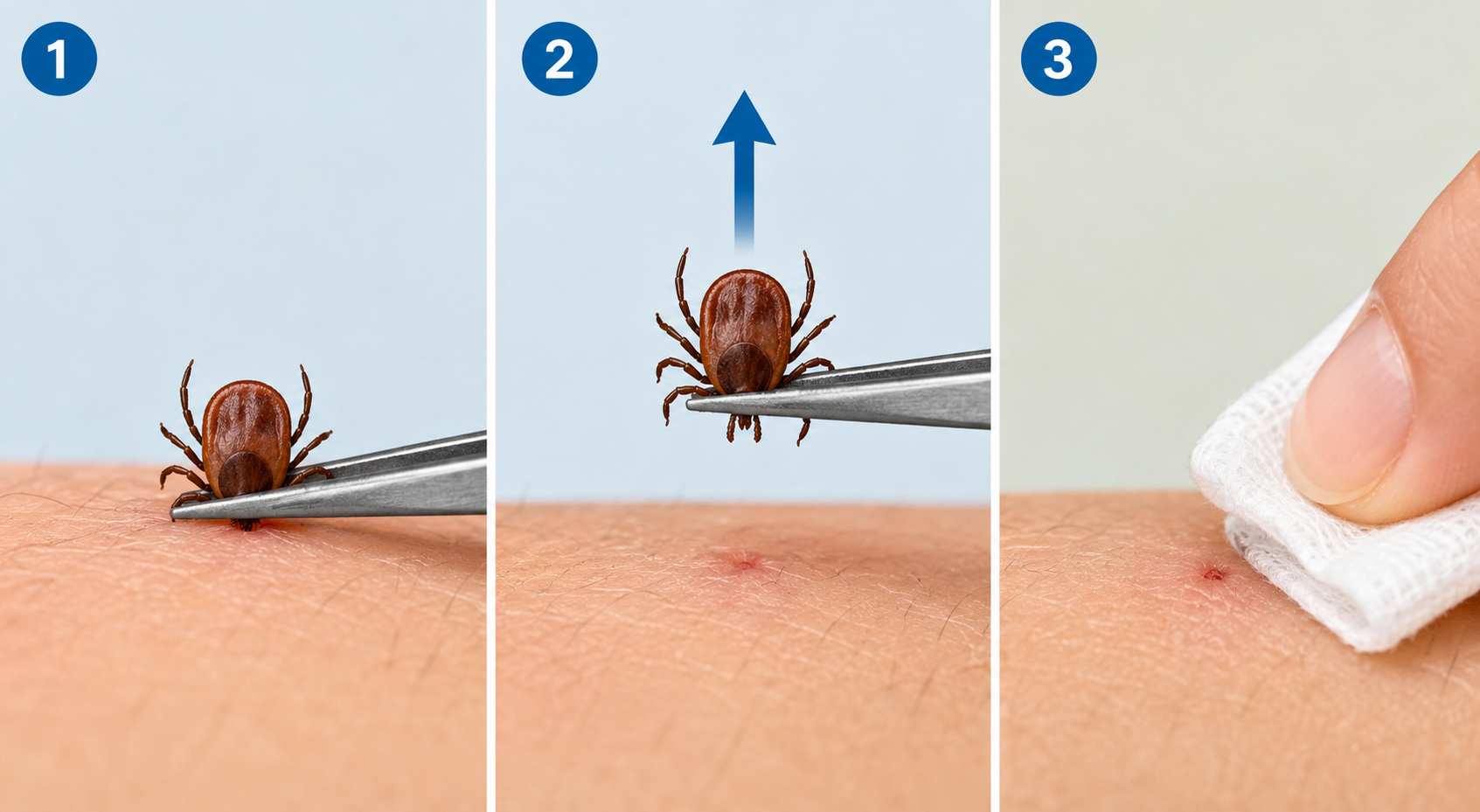
To safely extract an embedded tick, remain calm, locate your fine-tipped tweezers, and follow these clinical steps:
Step 1: Position the Tweezers
Grasp the tick as close to the skin's surface as possible. Your target is the tick's mouthparts (the capitulum), not its body. Securing the tick at the point of attachment prevents abdominal compression.
Step 2: Apply Steady, Upward Pressure
Pull upward with continuous, even pressure.
- Do not twist, jerk, or wiggle the tick.
- Twisting can cause the delicate mouthparts to break off and remain embedded in the dermis. If the mouthparts do break off and cannot be easily removed with clean tweezers, leave them alone. Disinfect the area and allow the skin to heal naturally; your body will typically expel the fragments over time, similar to a splinter.
Step 3: Disinfect the Bite Site
After extraction, thoroughly wash your hands and the bite area. Disinfect the site using:
- Rubbing alcohol (isopropyl alcohol)
- An iodine scrub, or
- Warm water and antibacterial soap
Step 4: Dispose of or Preserve the Tick
Never crush a tick with your bare hands, as pathogens can enter through micro-abrasions in your skin. Instead, dispose of the specimen by:
- Submerging it in rubbing alcohol
- Placing it in a sealed, airtight container
- Wrapping it tightly in tape, or
- Flushing it down the toilet
Clinical Note: In regions where Lyme disease is highly endemic, you may choose to preserve the tick in a sealed plastic bag with a slightly damp paper towel. If you develop symptoms later, medical professionals or specialized laboratories can test the specimen to identify any carried pathogens.
The Physiology of Folk Remedies: Why Common Myths Fail
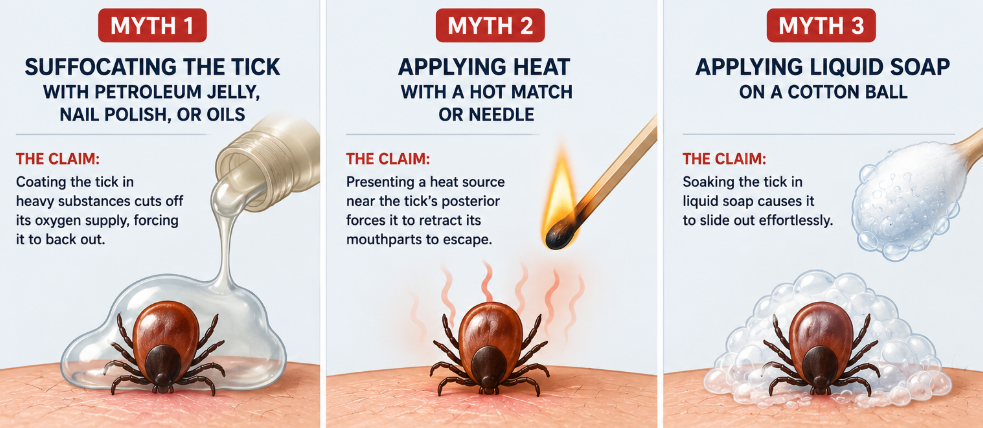
Numerous "folk remedies" suggest irritating or suffocating a tick to force it to detach on its own. From a biological standpoint, these methods are highly counterproductive.
When a tick experiences physiological stress, such as oxygen deprivation, extreme heat, or chemical irritation, its natural defense mechanism is to salivate excessively or regurgitate its highly infectious stomach contents directly into the host's bloodstream.
Myth 1: Suffocating the tick with petroleum jelly, nail polish, or oils
- The Claim: Coating the tick in heavy substances cuts off its oxygen supply, forcing it to back out.
- The Science: Ticks are highly efficient low-oxygen tolerators; they breathe incredibly slowly through specialized structures called spiracles. It can take hours for a tick to suffocate. During this prolonged period of stress, the tick is highly likely to salivate and regurgitate pathogens into the wound.
Myth 2: Applying heat with a hot match or needle
- The Claim: Presenting a heat source near the tick's posterior forces it to retract its mouthparts to escape.
- The Science: Extreme heat causes physical trauma. Instead of detaching, the tick may rupture, or immediately regurgitate its gut contents due to thermal stress. It also presents a direct risk of burning the patient's skin.
Myth 3: Applying liquid soap on a cotton ball
- The Claim: Soaking the tick in liquid soap causes it to slide out effortlessly.
- The Science: Chemical irritants trigger the same stress-induced regurgitation reflex. While soap is excellent for sanitizing the skin after the tick is removed, it should never be used as an extraction agent.
Post-Removal Surveillance: Symptoms to Monitor
Monitoring your health for 30 days following a tick bite is crucial for early diagnosis and treatment of potential infections.
Erythema Migrans (The "Bullseye" Rash)
A localized, minor red bump is a normal inflammatory response to a bite and typically resolves within 24 to 48 hours. However, an expanding red rash, particularly one featuring a clear central zone surrounded by a red ring, is a hallmark sign of Lyme disease.
Note: Erythema migrans does not appear in every case of Lyme disease, and its appearance can vary significantly based on individual skin tone.
Systemic Symptoms
Consult a healthcare provider immediately if you experience any of the following systemic symptoms within a month of a bite:
- Acute fever or chills
- Myalgia (muscle aches) or arthralgia (joint pain and stiffness)
- Uncharacteristic, profound fatigue
- Persistent headaches
- Lymphadenopathy (swollen lymph nodes)
If you seek medical attention, clearly communicate when the bite occurred, where you were walking or working when exposed (e.g., specific geographical areas or wooded environments), and present the preserved tick if available.
Conclusion
While ticks are active vectors for disease, proper management minimizes health risks. By keeping fine-tipped tweezers in your standard first-aid kit and relying strictly on mechanical extraction, you can address tick bites safely, calmly, and effectively.
.jpg)