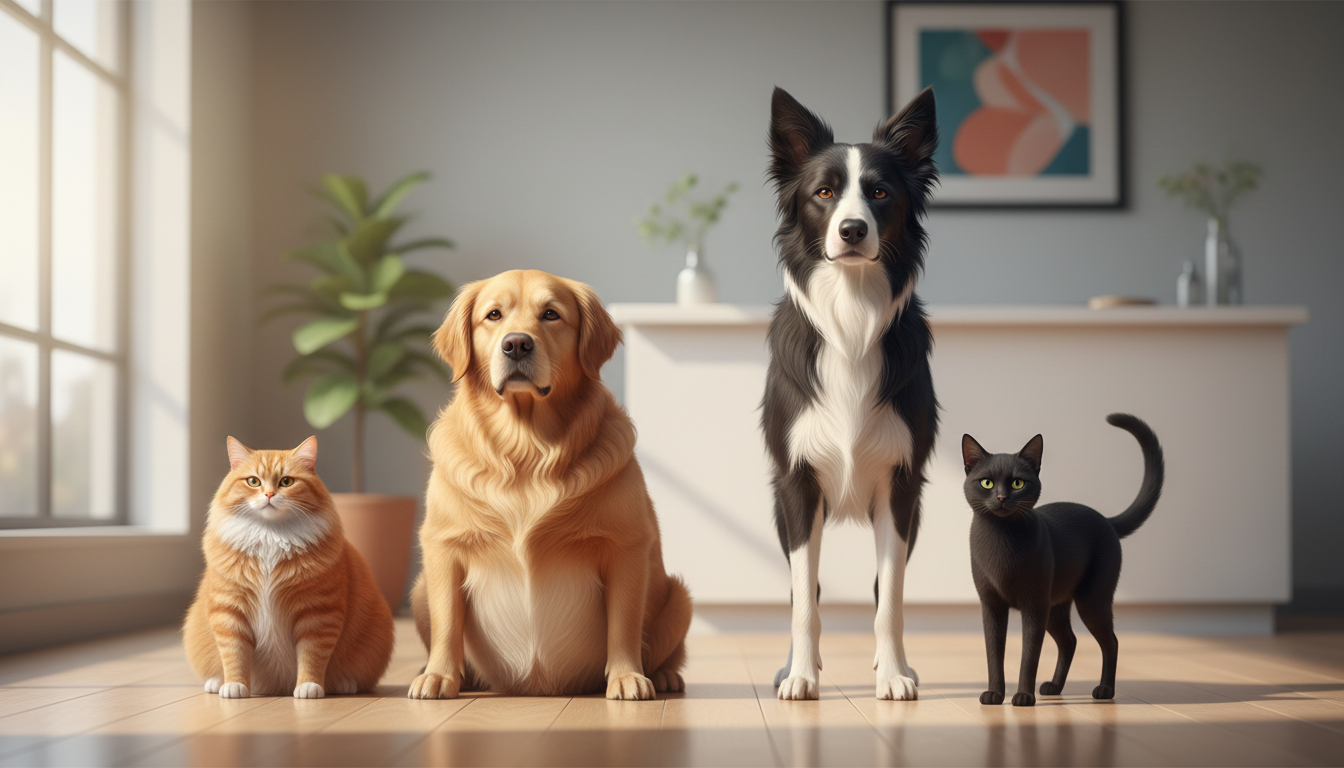

A pet who is overweight often looks perfectly healthy. Because weight gain usually happens slowly, many owners do not recognise it as a problem until it has already begun affecting their pet’s well-being.
That is what makes obesity so easy to overlook. A slightly rounder shape or a few extra kilos may seem harmless, especially when your pet is still eating, playing, and behaving normally. In reality, excess body fat can begin affecting your pet’s health long before obvious signs appear.
Obesity is generally defined as body weight that exceeds the ideal weight by more than 20 percent. However, obesity is far more than a number on the scale. Excess body fat affects movement, metabolism, breathing, quality of life, and even lifespan.
When Extra Weight Becomes a Disease
While it might be tempting to think of your pet’s body fat as “just” stored energy, it’s much more than that. Fat tissue is actually quite busy, helping regulate your pet’s metabolism throughout their body. However, once your pet starts storing too much excess fat, they begin producing hormones and inflammatory substances that can influence how everything works normally.
This is when “being chubby” turns into a true obesity. Instead of just carrying around a few extra pounds, the pet’s body begins undergoing changes that can impact multiple organs. Excess body fat has even been linked to chronic low-grade inflammation, altered insulin sensitivity, and an increased risk of various health problems.
In other words, being overweight isn’t just about vanity. Obesity is a true disease process that quietly influences a pet’s overall health long before we notice any outward signs.
What Pet Obesity Really Means
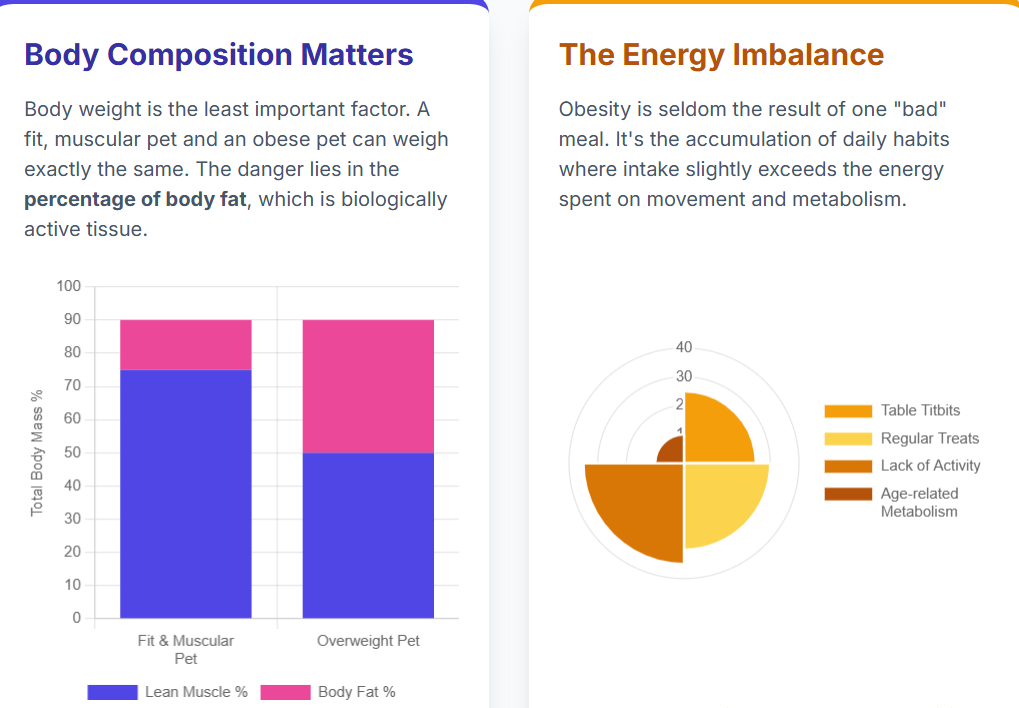
The focus is often placed on “body weight” when obesity is mentioned, yet the number on the scale tells only part of the story. The critical factor is the amount of body fat present. This is because two pets can weigh exactly the same amount yet still be very different, one can be fit and muscular with very little body fat, while the other may be carrying enough excess fat to affect their health.
This is also why percentages matter more than a single number on the scale. A Labrador Retriever with an ideal weight of 30 kg would be considered obese at around 36 kg, while a Chihuahua with an ideal weight of 3 kg would be obese at just 3.6 kg. The amount of extra weight is very different, but in both cases, it represents enough excess body fat to have real effects on health.
For this reason, vets do not rely on the number on the scale alone. They will usually assess your pet’s body shape, look for a visible waist, and check how easily the ribs can be felt. A healthy pet should have a noticeable waist when viewed from above, and the ribs should be easy to feel without applying undue pressure.
Why Pets Gain Weight So Easily
Fundamentally, weight gain occurs when energy intake exceeds energy expenditure. In practice obesity is seldom the result of one "bad" meal; it occurs when small habits are formed over a long time and contribute to a larger weight gain over the months and years, for example, slightly more food than is required is given; small treats are fed at regular intervals, titbits are taken from the table and insufficient activity. It is easy to see how these can add up over the course of a dog's life span especially with the modern tendency to keep dogs more indoors and exercise less than in the past, or food being used as a reward or a gesture of affection. Even though the motivation for doing these things is good, the excess calories still add up.
Some dogs will gain weight more easily than others due to their age, neuter status, breed and specific medical conditions. For example, elderly dogs have less energy requirements than their younger counterparts and will be prone to obesity if their feeding pattern does not change to reflect this.
However, as these changes occur very slowly over a prolonged period of time, they are seldom noticed by the owner until it becomes increasingly apparent.
Why Obesity Often Goes Unnoticed
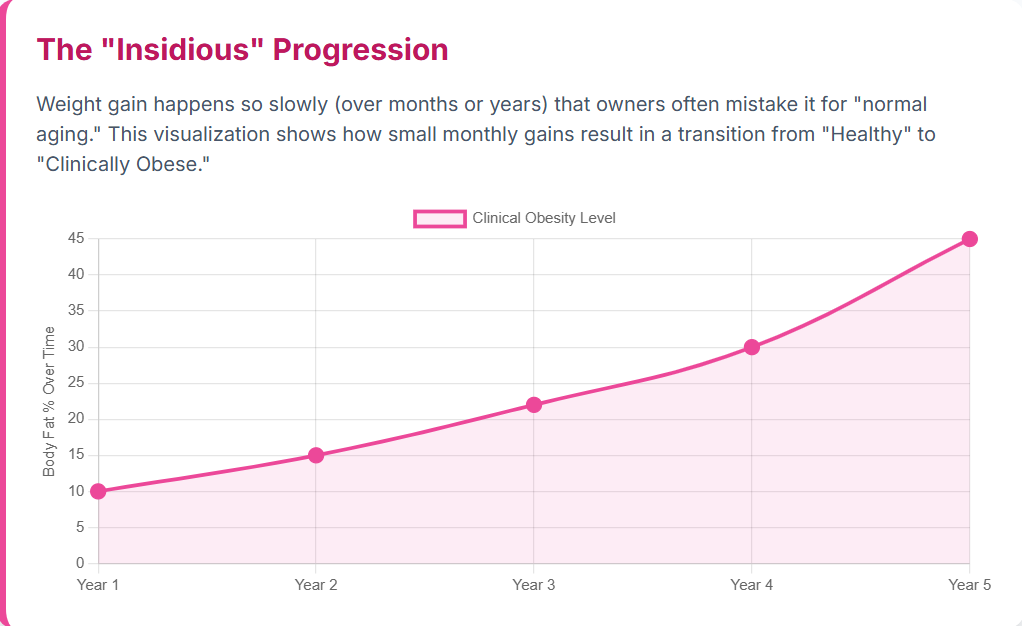
Obesity is easy to miss because it usually doesn’t cause obvious problems at first. Most pets continue to eat, play, and behave normally even while slowly putting on excess body fat, so there is often little to suggest that anything is wrong.
Because of this, many owners judge their pet’s weight mainly by appearance. That can be misleading. As overweight pets have become more common, our idea of a healthy body shape has gradually shifted. A pet that has lost its waistline or whose ribs are difficult to feel may still look perfectly normal simply because we see similar body shapes so often.
Food can make the problem even harder to spot. Treats, table scraps, and slightly larger portions often feel like small acts of affection and seem harmless on their own. Over time, however, these habits can make extra weight seem normal, making it difficult to recognise when a pet has become overweight.
For these reasons, obesity often goes unnoticed until it starts affecting your pet’s comfort, mobility, or overall health.
Why It Matters So Much
The problems caused by obesity are much greater than just a change in appearance. Fat puts additional strain on the body, which can affect your pet’s health in many different ways. One of the most visible changes is in their muscles, carrying too much weight will make it harder for them to move around. This could exacerbate conditions such as osteoarthritis and make them feel stiffer. As a result, your overweight pet might start to do less, which in turn leads to weight gain.
Obesity can also cause important changes in our metabolism. Fat is linked to insulin resistance and can increase the risk of conditions like diabetes mellitus, especially in cats. At the same time, being overweight means that our furry friends are likely to tire more easily, struggling more in warm weather as the added layer of fat prevents heat dissipation from the body.
This isn’t just about their health. Obesity affects their quality of life, and they might find it more difficult to move around, feel uncomfortable and be reluctant to undertake things like walks, play or explore in the same way. In extreme cases it may even limit lifespan. That’s why obesity is now recognised as one of the most important and preventable health challenges facing our companions today.
The Signs You Shouldn’t Ignore
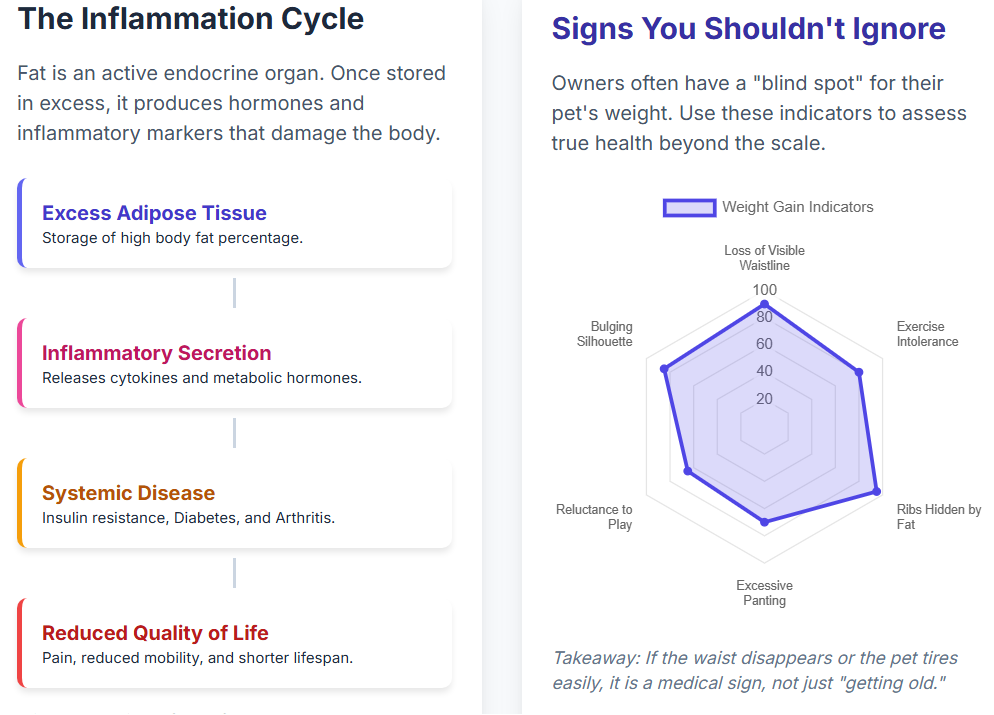
These signs of obesity might be hard for you to spot. One of the first things you might notice is that your pet loses its normal shape, their waistline disappears, their belly gets rounder, and you can no longer feel their ribs under a thick layer of fat.
Changes in behavior could also point to weight gain. Your overweight pet might get tired quicker or pant while exercising, or just seem less interested in running, jumping or playing around. We often blame those behaviors on aging. But weight is often a culprit too. So, if you see these changes starting to show, it’s time to take a closer look at your pet’s weight. Obesity is a lot easier to deal with if you catch it early, before it begins impacting your pet’s life, comfort, and overall health.
Conclusion
Pet Obesity, It Can Be Frighteningly Easy to Miss. As our pets put on weight gradually, we tend to shrug off the extra kilos as normal aging or just a case of getting rounder. The truth is that carrying too much body fat can seriously affect a pet's mobility, metabolism, comfort and general well-being long before health problems begin to show.
Fortunately, obesity is largely preventable and, in most cases, treatable. Recognising the warning signals, understanding the risks and making wise choices about feeding and exercise can make a big difference to your pet's future. Remember, helping our pets achieve and maintain a healthy weight isn't just about improving their looks - it's about giving them the gift of a longer, happier and healthier life.


.jpg)