
“Until we have the courage to recognize cruelty for what it is - whether its victim is human or animal - we cannot expect things to be much better in this world." - Rachel Carson
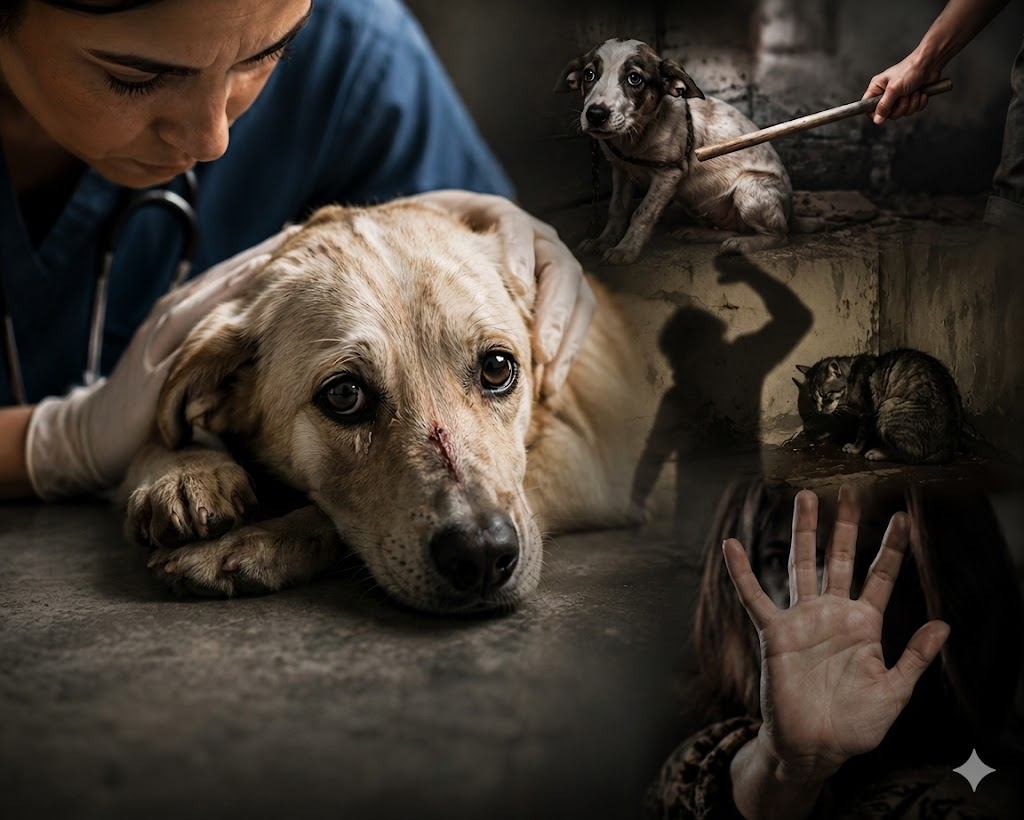
Animal abuse is typically an indication of a larger problem in society. As claimed by psychologists, criminologists, and forensic experts from across the globe, abuse of animals is a behavioral indicator that an individual might resort to violence against people. The number of instances of cruelty towards animals in India continues to stay high, despite the presence of elaborate legislation for that. It is in this particular situation where the role of veterinarians becomes especially prominent as it is in this area where they have to come face to face with cases of animal abuse.
India's animal welfare literature increasingly emphasizes this trend. With the advent of urbanization, commercialization, and a change in social attitudes, animals have become an easy target for abuse. Welfare, in this regard, means more than mere survival. While an animal may look fine physically, it might still be scared, stressed, in pain, or distressed. Welfare, therefore, is both physical and psychological.
Cruelty to Animals Indicates Potential for Human Violence
This relationship between violence toward animals and a higher chance of human violence is known internationally as "The Link". This is not an intuition-driven idea; on the contrary, this is something proved through decades of scientific research.
There is one theory, namely Violence Graduation Theory, according to which, a perpetrator begins with committing less violent actions towards weaker victims during the early stage of their criminal history and then goes on with greater violence. Therefore, cruelty practiced against weaker victims repeatedly might lead to indifference toward the suffering of those victims. Over time, it becomes a punishment or a way to channel emotions. Researchers found out that prior instances of animal abuse were always followed by the abuse of a human being.
There is another theory, called Deviance Generalization Theory, that explains the act of abusing animals from a slightly different point of view. According to the theory in question, violence against animals is a part of other antisocial behaviors such as bullying, assaults, domestic violence, drug use, aggression, and other types of anti-social actions. In turn, these actions stem from such factors as a lack of empathy, impulsive behaviors, a history of violent experiences, and an attempt to dominate over somebody else.
The link between animal abuse and human violence was proven by researchers Ascione and Arkow. As a rule, animal abuse always takes place alongside the abuse of children, spouses, and older people.
In case of animal abuse, the job of a vet goes beyond curing an illness. Each new incident of fractures, burns, poisoning, or unexplained traumas becomes a sign that almost never indicates anything but abuse.
Current Rules and Regulations Regarding Animal Welfare
Legislation related to animal welfare reflects the rising issue of cruelty towards these creatures. There are regulations concerning transport, work-related abuse, abuse in entertainment, breeding, and general welfare. For instance, the Prevention of Cruelty to Animals Act, 1960 laid down a foundation for more stringent and comprehensive regulation of suffering, introducing the concept of necessary suffering as a crime.
Another example includes The Prevention of Cruelty to Draught and Pack Animals Rules, 1965 which was developed as a solution to the widespread phenomenon of putting excess loads on pack or draught animals (such as bullocks, horses, camels, and donkeys). In their turn, the latter used to get exhausted and injured because of stress and overworking.
The rules that were made in relation to the transportation of animals are the Transport of Animals Rules and the amended version of these rules from 2001. They deal with the problem of transportation of animals for slaughter in conditions that did not provide enough room, ventilation, and food or water. Due to overcrowding, cattle got stuck and died from asphyxiation before arriving at the slaughterhouse.
Also, the same goal is pursued by The Performing Animals Rules, 1973 and the Performing Animals (Registration) Rules, 2001. They address harm caused to performing animals that had been accepted as normal for the entertainment industry.
The Breeding of and Experiments on Animals (Control and Supervision) Amendment Rules, 2005 and CPCSEA guidelines serve to minimize suffering caused to laboratory animals.
Thus, animal welfare legislation in India gradually progressed from prohibiting abusive activities that were clearly defined as such to covering a wider range of issues such as suffering while transporting, overworking, confining, and neglecting. However, even with new acts adopted by the state, their implementation is quite difficult, particularly for informally regulated spheres where cruelty towards animals takes place.
Currently, the development of the animal welfare system implies raising awareness among citizens, encouraging veterinarians to promote their role in the matter, and taking a scientific approach towards the issue. Yet, enforcement of existing animal welfare acts is rather inefficient since there is low punishment for violating them and little reporting.
The development of animal welfare legislation in India should be associated with the implementation of existing acts, making more efforts to enforce them, actively involving veterinarians in this process, and increasing awareness among citizens. Most importantly, the welfare of animals should be viewed not only as a matter of legislation but as a moral aspect of society.
Responsibilities of vets beyond the Clinics
A vet, as a professional, has to focus not only on illnesses that animals suffer from but also on the welfare of each and every one of them.
The welfare of an animal implies much more than its absence of diseases. The behavioral aspects of an animal along with the lack of fear or distress are also essential components of welfare. Therefore, an animal cannot be considered healthy even though it shows no signs of any diseases.
As a vet, you are able to detect signs of animal cruelty such as frequent fractures, injuries, burns, poisoning, mutilation, or neglect. Keeping silent in this situation equals ignoring cruelty against animals. Also, the same can be said about performing ABC (Animal Birth Control) sterilizations without providing proper anesthesia or care after surgery. You can organize campaigns in schools and villages in order to draw people's attention to these facts.
Ensuring Your Ethical Responsibilities
As stated in the Animal Welfare Principles by AVMA, animals should be treated in a manner that will reduce their fear, pain, distress, or suffering. The veterinarian who violates these principles by practicing unethical activities fails not only the animal but also their profession.
Ensuring Ethical Responsibility
According to the AVMA Animal Welfare Principles, animals should be treated so as to minimize fear, pain, stress, and suffering. When a veterinarian fails to fulfill these obligations by tolerating or participating in unethical practices, he/she fails as a veterinarian.
What You Can Do Right Now
- Report animal abuses
- Carefully document injuries
- Reject unethical and unscientific procedures
- Promote anesthesia and humane handling
- Create awareness programs regarding animal welfare
- Promote responsible ABC sterilization practices
Immanuel Kant warns us, “He who is cruel to animals becomes hard also in his dealings with men. We can judge the heart of a man by his treatment of animals.”
When the patient cannot speak, the vet must.
.jpg)