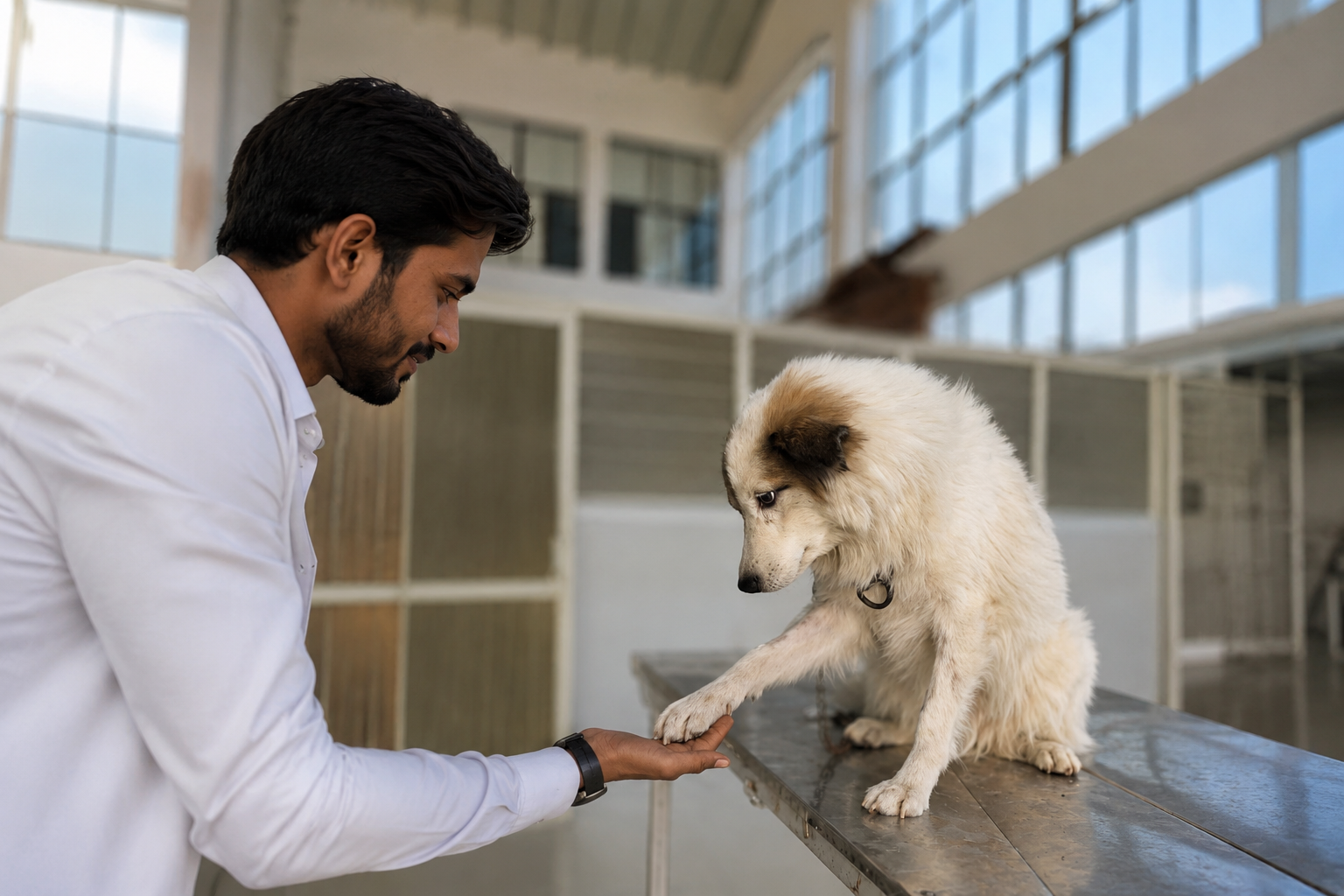

A Quiet Revolution of the Psychological Well Being of Animals
For many decades, the field of veterinary medicine focused primarily on diagnosing diseases, healing injuries, prescribing drugs, performing operations. Any unusual behaviors from a dog who would stop eating food or cat who withdraw from interacting with people were attributed to being just “behavior”.
That terminology is changing.
The contemporary field of veterinary science considers psychological well-being integral and equally important as physical well-being. More and more evidence has emerged from researchers and practitioners in this industry suggesting that mood, stress, daily habits, socialisation, and even boredom can affect an animal’s biology. The family pet is no longer viewed as a creature that merely reacts to the environment, but one that truly experiences it
And that shift is ushering in a new age in Veterinary Medicine.
When Behaviour became Biology

A dog that suddenly stops playing fetch;A cat that began to hide beneath furniture for several days;A pet that was sleeping excessively after losing a loved one in the family.
For all these years it was considered difficult to describe those behaviours using scientific language.
But then came the era of neuroscience.
Studying the psychology of companion animals, specialists noticed that prolonged stress and emotions often triggered some physiological processes. Increased amounts of cortisol in an animal, alteration of the sleep cycle, problems with appetite control, changes of this kind were noted along with behavioral manifestations that appeared during periods of anxiety or social stress.
Those phenomena opened a whole new dimension of the companion animal science.The mental became physiological.
The Inner Workings of a Pet’s Mind
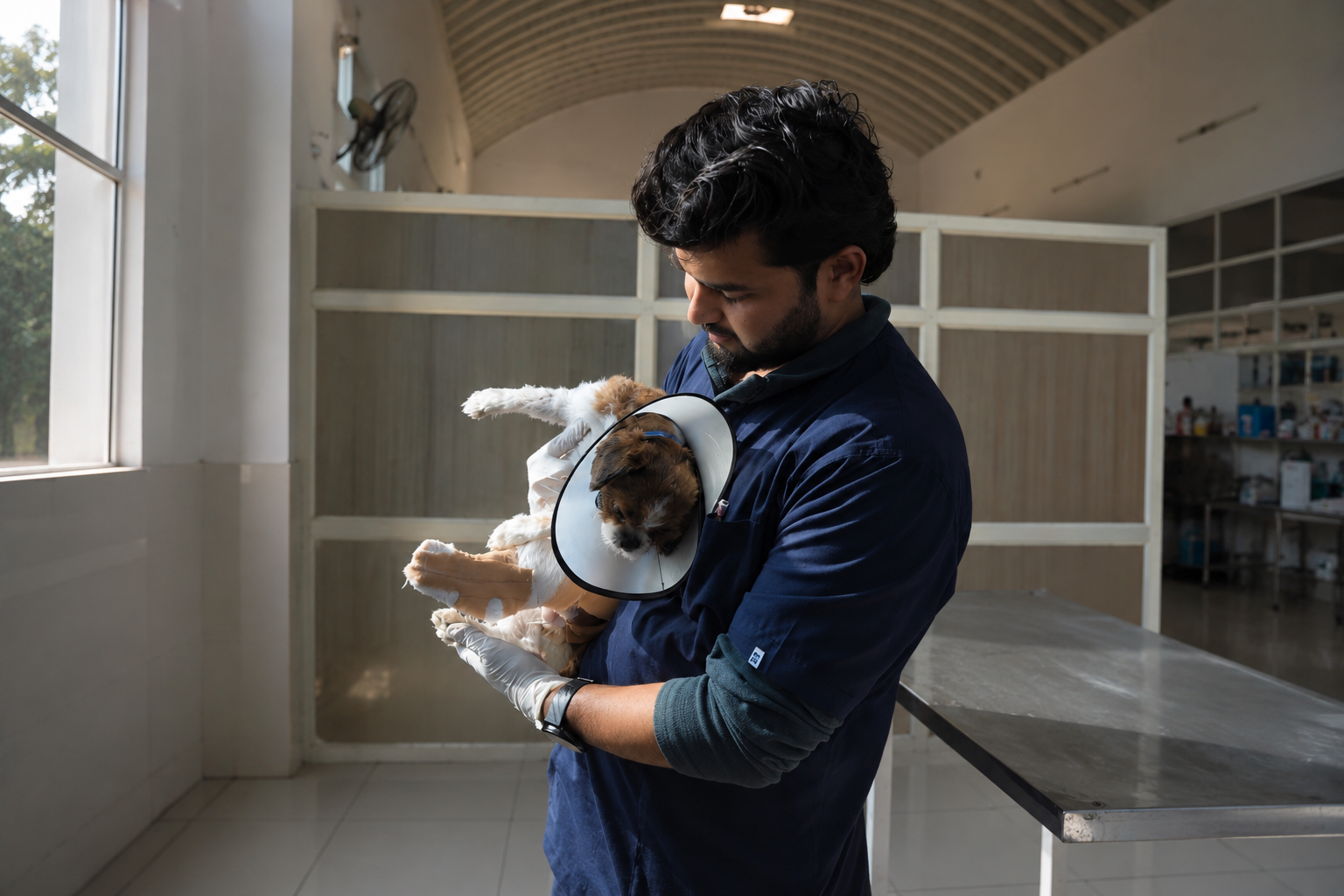
Why dogs and cats may be feeling things stronger than we imagine
One of the reasons why the issue of the mental state of companion animals raises interest among scientists is connected with the similarities of brain structures between humans and other mammals. The amygdala, hippocampus, limbic system, those areas responsible for experiencing emotions and forming memories in us, are also present in pets.
In recent years, neuroimaging of dogs has shown something really surprising about their brain functions: the positive response to the sounds of a familiar voice, human scent, praise, and even socializing with people. Some studies even indicate that dogs can bond in much the same way as toddlers do with their parents.
Even cats that are considered to be less sensitive are receiving closer attention of behavioral specialists. Peculiarities of grooming, postural behaviors, vocalizations, and interactions between the cats provide a lot of information about the animal’s emotional well-being.
Research that Changed the Conversation
Perhaps one of the most prominent directions in the research conducted regarding pets’ mental well-being is related to separation anxiety and attachment behaviors.
In a series of experiments, scientists analyzed the behavior of dogs placed in a novel environment and separated from their owners. The first thing they noticed was usual responses like pacing, vocalizing, and becoming excessively attentive to the surroundings. However, the most interesting part of the research is associated with the results they could observe from physiological measures: higher heart rates, increased levels of stress hormones, changes in sleep pattern, and reduced exploratory behaviors. Even in the case of prolonged exposure to the negative stimuli and lack of predictable comfort zone, specialists were able to observe symptoms that resemble “learned helplessness” in humans.
The result of the studies gave veterinary scientists a completely different perception of separation anxiety in pets.No more misunderstanding of the problem as disobedience.
It was recognized as stress and physiological disorder.
The Life of a Modern Pet
Oddly enough, the modern world creates fewer threats for companion animals. Despite this, there is an increase in the number of pets affected by stress-related disorders.
Urban indoor lifestyle, insufficient environmental stimulation, erratic routines, extended periods of owner absence, and lack of interactions create the environment that is safe yet can be mentally exhausting. In particular, the following conditions have recently attracted a lot of attention of vets:
- compulsive licking,
- destructive behavior,
- excessive vocalizing,
- over-grooming in cats,
- sleep disturbances,
- social isolation.
As a consequence of this issue, today, more and more veterinarians emphasize the importance of environmental enrichment activities for their patients.
Entering a New Dimension of Companion Animal Healthcare

Advances in behavioral medicine
One of the key innovations of the field of veterinary medicine is the development of the new technologies that allow collecting behavioral data on pets. Smart collars and special wearables are able to monitor:
- quality of sleep,
- physical activity,
- heart rate variability,
- motion patterns,
- behavioral responses connected with stress.
Scientists will be able to utilize them to detect the early symptoms of anxiety, pain, and cognitive disorders before they become obvious even for the owners.
At the same time, behavioral medicine gradually becomes evidence based. Relying primarily on the direct observation of the pet’s actions, specialists learn to assess behavior patterns, analyze long-term changes, and create an individual behavioral profile.
Conclusion
The revolution of understanding of companion animals
This is a fundamental step forward made in veterinary science in terms of approaching pet companions. Contemporary companion animal medicine moves closer to the holistic concept of healthcare where physical well-being, environment, neurology, and behavioral health are inseparable parts of each other.
Not only does the companion animal become the object for diagnosis and treatment.It becomes a sentient individual with complex emotional experiences.
Perhaps, that is the main reason of this revolution.
Veterinary medicine did not suddenly discover emotions in animals.It learned how to listen to them better.


.jpg)