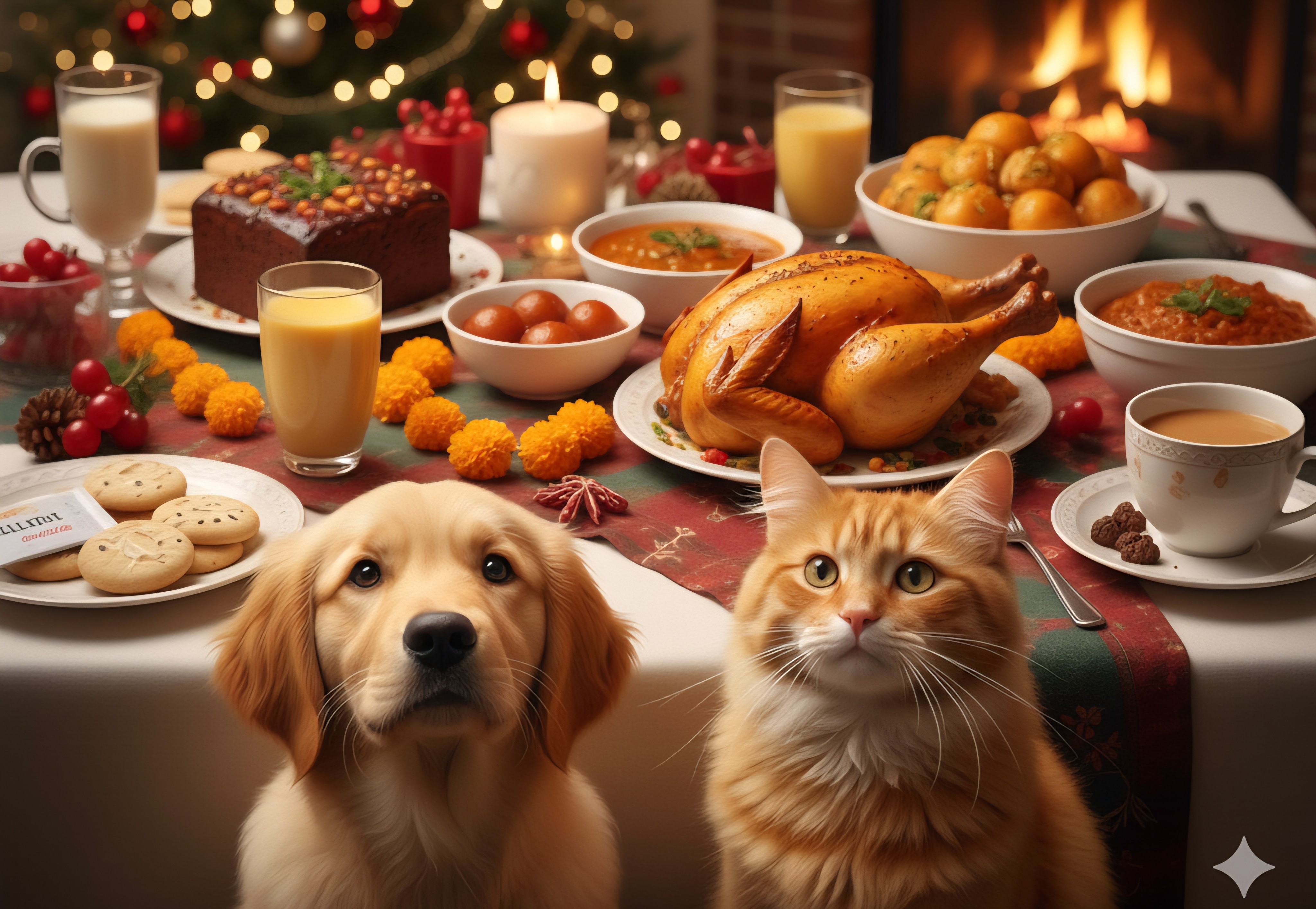

The holiday season is a magical time - filled with family, warmth, and, most notably, food. While you’re enjoying that extra slice of pie or spoonful of gravy, your furry friend is likely hovering, hoping for a dropped morsel or a generous handout. Unfortunately, the joy of the holidays often coincides with a significant spike in emergency vet visits. Many of our favorite festive foods are highly toxic or dangerous to pets.
Keep these items well out of paw’s reach this year to ensure your holiday celebration stays merry and bright, not stressful and expensive!
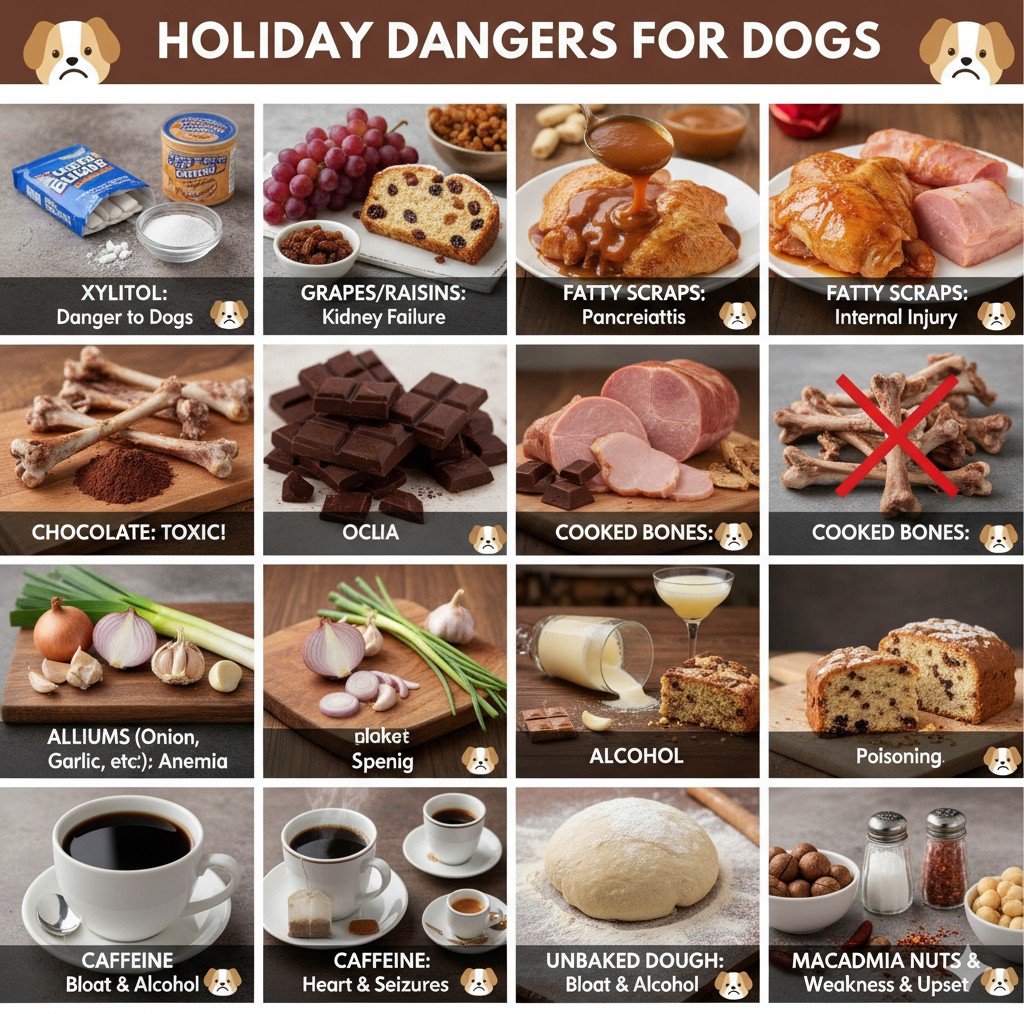
10 Foods to Keep Away From Pets
- Xylitol and Other Artificial Sweeteners
Xylitol is a sugar substitute commonly found in sugar-free chewing gum, candies, certain brands of peanut butter, and increasingly, in sugar-free holiday baked goods. For dogs, even small amounts cause a massive, rapid release of insulin, leading to severe hypoglycemia (a life-threatening drop in blood sugar). Higher doses can cause acute liver failure. Always check the ingredient list of any food labeled "sugar-free." - Grapes and Raisins
Whether fresh, baked into fruitcake, or found in holiday snack mixes, grapes and raisins pose a serious risk of acute kidney failure in dogs. The exact toxic compound is still unknown, but even a small quantity can be fatal. Keep fruit bowls and baked goods that contain them securely stored. - Fatty Table Scraps (Gravy, Turkey Skin, Ham Fat)
The skin and fatty trimmings from holiday meats, as well as rich gravies and buttered sides, are far too rich for a dog’s digestive system. Ingesting too much fat can trigger Pancreatitis, a painful and sometimes deadly inflammation of the pancreas that requires immediate, aggressive veterinary care. - Cooked Bones
While raw bones are sometimes safe, cooked bones (especially from turkey, ham, or prime rib) are brittle and can easily splinter. These sharp fragments can cause serious internal injury, leading to choking, severe constipation, or, worst of all, tearing or perforation of the esophagus, stomach, or intestines. - Chocolate
Chocolate contains theobromine, a compound toxic to dogs. While milk chocolate often causes only mild stomach upset, dark chocolate, baking chocolate, and cocoa powder contain high concentrations and can cause vomiting, diarrhea, hyperactivity, tremors, seizures, and even death. - Onions, Garlic, Leeks, and Chives (Allium Family)
These common flavor enhancers are found in almost all holiday savory dishes, like stuffing, mashed potatoes, and roasts. The Allium family contains compounds that damage your pet’s red blood cells, leading to anemia (lack of oxygen). Garlic is about five times more potent than onions. - Alcohol
A splash of eggnog, unattended mixed drinks, or fermented fruitcake, any source of alcohol can be toxic. Alcohol can cause significant drops in body temperature, blood pressure, and blood sugar, leading to alcohol poisoning, respiratory distress, and coma. - Unbaked Yeast Dough
If your pet eats raw bread dough, two things happen: first, the dough will expand in the warm, moist environment of the stomach, causing severe bloating and pain. Second, the yeast fermentation process produces ethanol, resulting in a dangerous level of alcohol poisoning. - Caffeine
While not strictly a food, holiday gatherings often mean more coffee, espresso, and tea left out. Caffeine, like theobromine in chocolate, is a potent stimulant that can cause dangerous heart palpitations, hyperactivity, tremors, and seizures in pets. - Macadamia Nuts and High Salt/Spice Foods
While most nuts are just fatty and can cause stomach upset or pancreatitis, macadamia nuts are uniquely toxic, causing temporary (but scary) weakness, tremors, and an inability to walk (especially in dogs). Additionally, highly seasoned or excessively salty foods can lead to sodium ion poisoning or digestive upset.
What to Do in an Emergency

If you suspect your pet has eaten something on this list, do not wait for symptoms to appear. Immediate action can save their life.
- Stay Calm. Remove any remaining food from the pet’s reach.
- Call Your Vet or an Emergency Clinic. Have the package or ingredient list of the consumed item ready. The veterinary staff needs to know the pet’s weight, the substance ingested, and the approximate amount eaten.
- Contact the Pet Poison Helpline Specialized toxicologists can offer guidance to you and your vet.
Wishing you and your pets a happy, healthy, and safe holiday season!


.jpg)