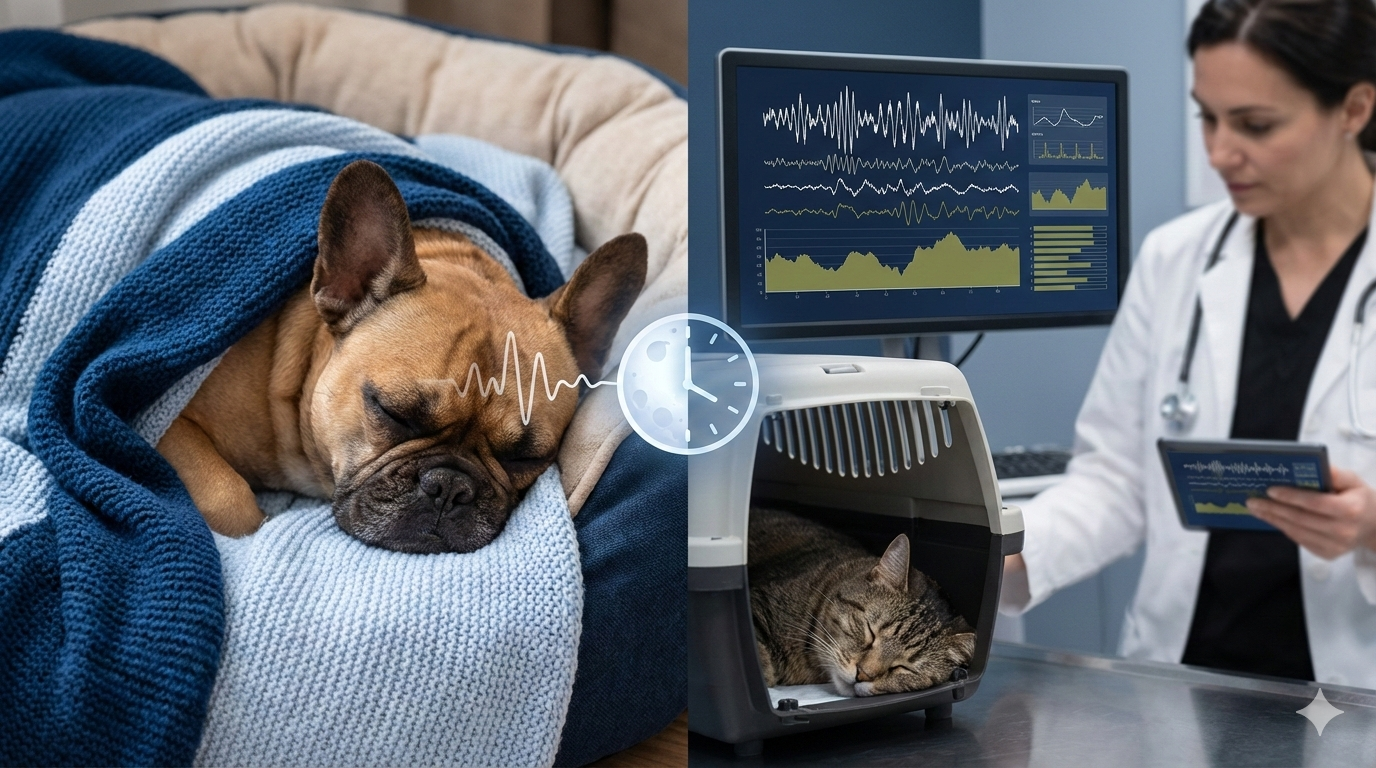

While traditionally viewed through the lens of behavioral observation, sleep in companion animals is increasingly recognized as a critical pillar of physiological health.
In veterinary medicine, sleep is an active state essential for homeostatic regulation, memory consolidation, and neuroplasticity. When these processes are disrupted, the resulting sleep disorders can serve as primary conditions or secondary indicators of underlying systemic pathology.
The Physiological Role of Sleep
Sleep architecture in dogs and cats consists of alternating cycles of Non-Rapid Eye Movement (NREM) and Rapid Eye Movement (REM) sleep. During these cycles, the glymphatic system facilitates the clearance of neurotoxic metabolic waste, and the endocrine system regulates the release of growth hormones and cortisol. Chronic sleep fragmentation can lead to impaired cognitive function, immune suppression, and exacerbated inflammatory responses.
Clinical Classification of Common Sleep Disorders
Obstructive Sleep Apnea (OSA)
OSA is characterized by the partial or complete collapse of the upper airway during sleep, leading to hypoxia and hypercapnia.
- Pathophysiology: This is predominantly observed in brachycephalic breeds due to elongated soft palates, stenotic nares, and redundant pharyngeal tissue.
- Diagnostic Indicators: Heavy snoring (stertor), observable episodes of apnea followed by abrupt arousal, and chronic lethargy.
Narcolepsy
Narcolepsy is a neurological disorder affecting the brain's ability to regulate the sleep-wake cycle.
- Pathophysiology: Research indicates a genetic basis in certain breeds (e.g., Labradors, Doberman Pinschers) linked to a mutation in the hypocretin (orexin) receptor 2 gene.
- Diagnostic Indicators: Sudden-onset cataplexy (loss of muscle tone) triggered by positive emotional stimuli (e.g., food or play). Animals transition directly from an alert state into REM sleep.
REM Behavior Disorder (RBD)
RBD involves the absence of normal muscle atonia during the REM phase of sleep.
- Pathophysiology: The pontine tegmentum fails to inhibit motor neurons, allowing the animal to physically enact dream sequences.
- Diagnostic Indicators: Complex motor activity, including limb movements, vocalizations, or biting. It is distinguished from generalized seizures by the ease of arousal and the absence of a post-ictal state.
Secondary Insomnia and Cognitive Dysfunction
Insomnia in veterinary patients is typically secondary to co-morbidities.
- Pathophysiology: Chronic pain (osteoarthritis), pruritus (atopic dermatitis), or metabolic conditions(polyuria/polydipsia) frequently interrupt sleep cycles.
- Cognitive Dysfunction Syndrome (CDS): In geriatric patients, neurodegeneration can lead to "sundowning," where the circadian rhythm is inverted, resulting in nocturnal wakefulness and vocalization.
Clinical Observations for Veterinary Consultation
Clinicians rely on owner-reported data to differentiate between benign sleep behaviors and pathological disorders. Immediate veterinary evaluation is indicated if the following are observed:
- Alterations in Circadian Rhythms: Significant shifts in the sleep-wake cycle that interfere with normal daily biological functions.
- Hypnagogic Aggression: Sudden arousal accompanied by defensive or offensive aggression, which may indicate REM disorders or localized pain.
- Respiratory Distress: Stertorous breathing or gasping that suggests compromised airway patency.
- Excessive Daytime Sleepiness (EDS): Scoring high on lethargy scales despite adequate sleep duration, often pointing to poor sleep quality or systemic disease.
Therapeutic and Environmental Management
- Circadian Stabilization: Maintaining a consistent photoperiod and activity schedule to support endogenous melatonin production.
- Environmental Optimization: Utilization of orthopedic support for geriatric patients to reduce musculoskeletal discomfort and implementing noise-controlled environments.
- Clinical Documentation: Owners should be encouraged to provide high-definition video recordings of sleep events to assist in differential diagnosis between neurological events and sleep-phase disturbances
Conclusion
Advancements in veterinary sleep medicine emphasize that quality of sleep is a diagnostic marker for general health. Early recognition of disordered sleep patterns allows for more effective intervention and management of both neurological and systemic conditions.


.jpg)