
Students at IIVER Rohtak Take on a Big Question
Surgery does not just end after the last suture is placed. Accomplishment of surgery is dependent on duration of tissue recovery and overall animal health. This review covers how the cells react to the trauma of surgery.
The review and its Authors
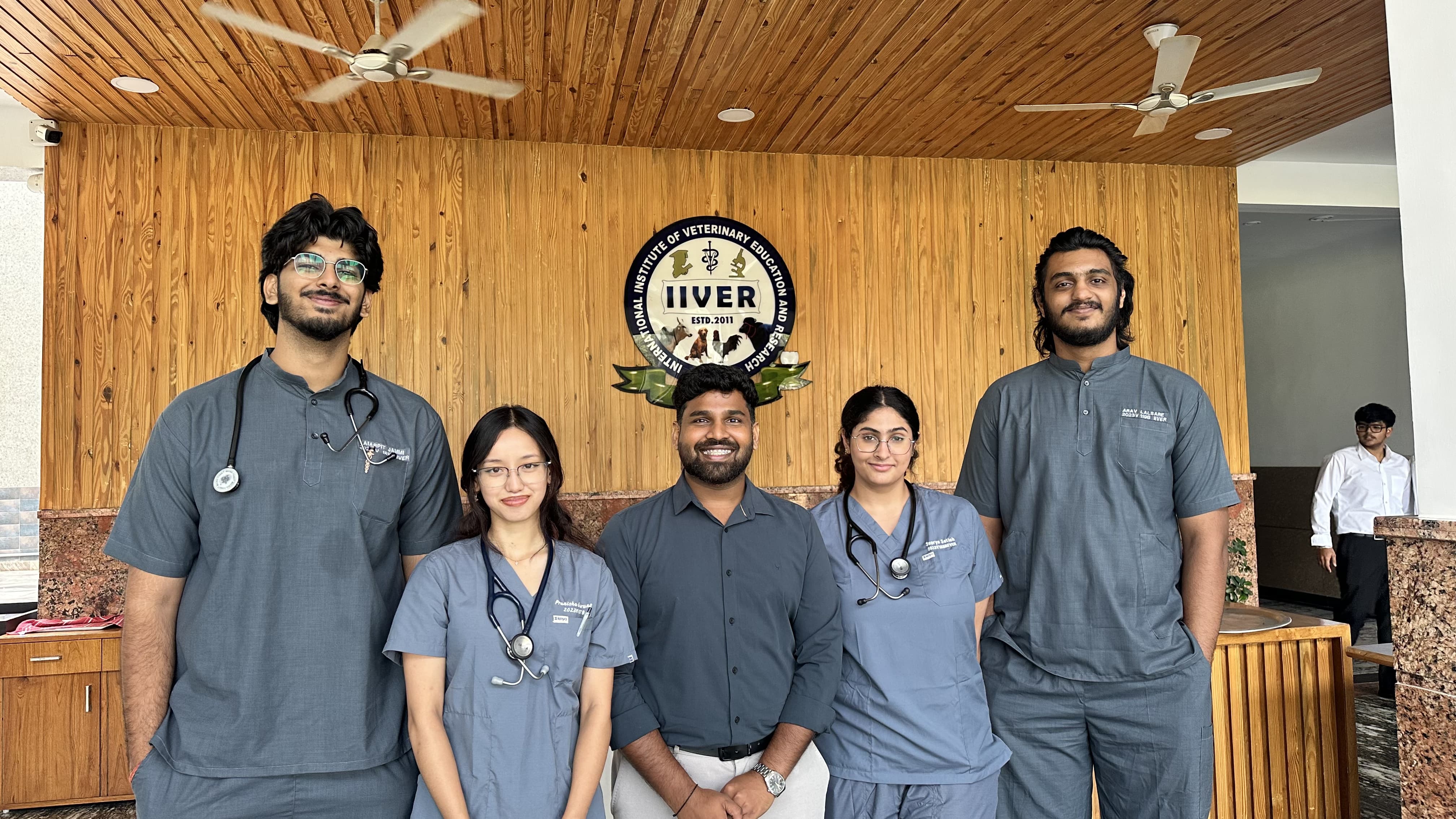
“Integrated stress response and postoperative neuroinflammation in veterinary surgery: therapeutic perspectives” was published in the Indian Journal of Veterinary Surgery (47(1): 3–11, April 2026). It was written by undergraduate scholars Arav Lalsare, Pranisha Gurung, Soorya Satish, Saiarpit Jammi and Manav Namrata Jignesh Mehta, under the guidance of G. Ravi Prakash (corresponding author) and Mohd Saif, Assistant Professors, and Azad Ahanger, Professor and Head, Department of Veterinary Pharmacology and Toxicology, IIVER, Rohtak.
What exactly happens after a surgery
Surgical procedure is followed by multiple chain reactions, which includes release of prostaglandins and cytokines, stress hormones and immune system gets a major check.
The duration of a surgery impacts these reactions highly, longer duration lead to more of these reactions.
If not controlled on time, can contribute to delaying in wound healing, affecting immunity and overall animal heath.
Along with this, if the pain is left unchecked, can lead to anorexia and self mutilation, which delays healing further.
Cell's Stress response
Every cell in our body have a in-built integrated stress response for emergency situation
But this also has a shortcoming, if this response stays for longer duration it can lead to cell death and cause nerve inflammation, delayed healing, and extra sensitivity to pain.
What vets use now
Multimodal pain relief: NSAIDs, opioids, alpha-2 agonists, NMDA blockers, and local anaesthetics.
They work well on pain signals, but can harm the gut and kidneys, suppress immunity, and slow tissue repair. The risk is highest in older animals, or those with low blood pressure or metabolic problems.
What's coming next
- Newer approaches target the root cause, not just the pain: ISR modulators, antioxidants, anti-cytokine drugs, and immunomodulators.
- Precision care: biomarker-guided pain relief, opioid-sparing anaesthesia, and protocols tailored to each species.
- The goal is less pain, faster healing, and better welfare across species.
For the full science, references, and therapeutic details, read the article https://epubs.icar.org.in/index.php/IJVS/article/view/180011